I made it 3x easier for 20,000+ employees to get back to work.
Introduction
To increase in-person collaboration, RBC Royal Bank requires employees to work from the office 3 days a week . 🔗
As a Senior Interaction Designer for the Workplace Solutions team, I was tasked with creating tooling that assisted and encouraged a smoother "return to office" transition.
I designed a 0 to 1 mobile app that encouraged in-office attendance and collaboration through booking rooms, desks and meetings.
Results
🏆 Scaled from 3,000 MVP users to 20,000+ monthly active users across 5 RBC corporate offices within 6 months.
🏆 Achieved 34% adoption across eligible employees within 8 weeks of launch, validating the need for experience.
🏆 70% of surveyed employees reported a significant improved in-person planning attributed to our product.
The Challenge
Less than 20% of employees were coming into the office 3 days a week.
Problem #1
Attendance was socially driven, not policy driven.
Company Perspective
RBC's leadership team didn't want to enforce the 3 day in-office policy with any consequences because they believed it might disrupt company culture. They focused on emphasizing the social and collaboration benefits of being in-office instead.
Manager Perspective
People managers were asked to lead this transition by example and encourage their teams to come into the office.
However, without visibility into who was actually coming in, managers couldn't coordinate any in-person days effectively.
They had to repeatedly ask people for availability to figure out the best day for everyone to come in.
Employee Perspective
How do we help managers and employees get visibility into who’s going to be in-office?
Solution #1
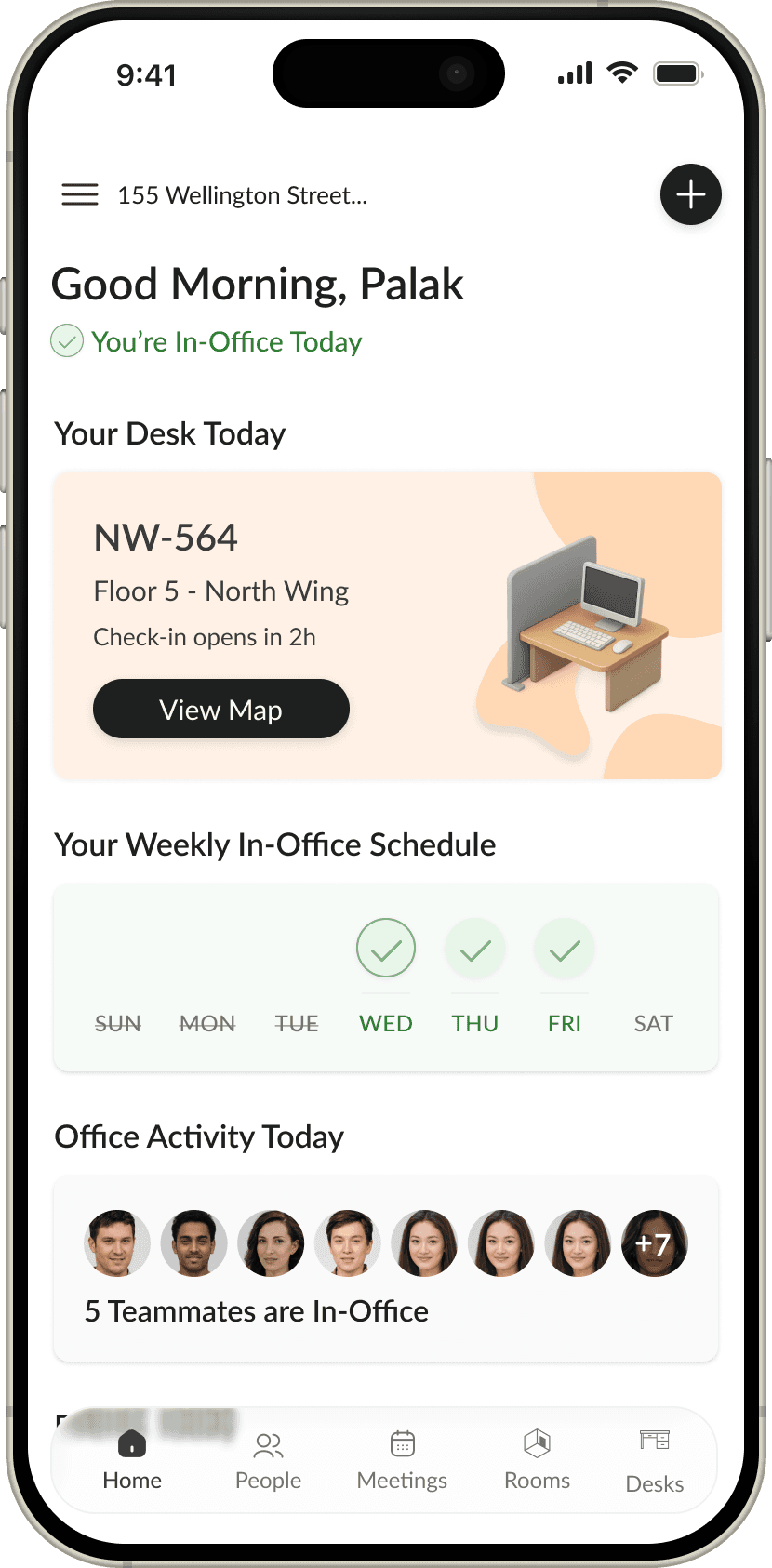
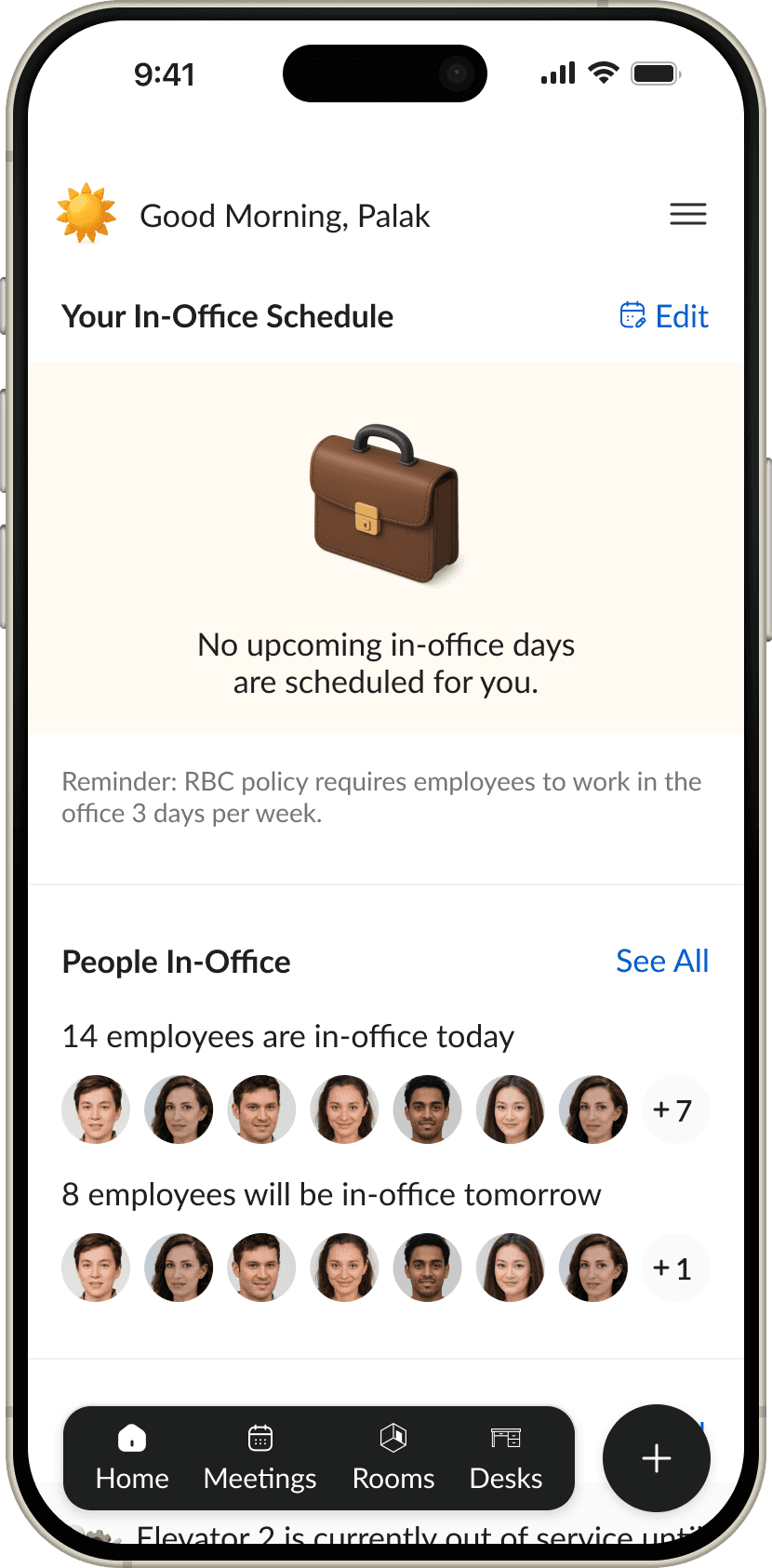
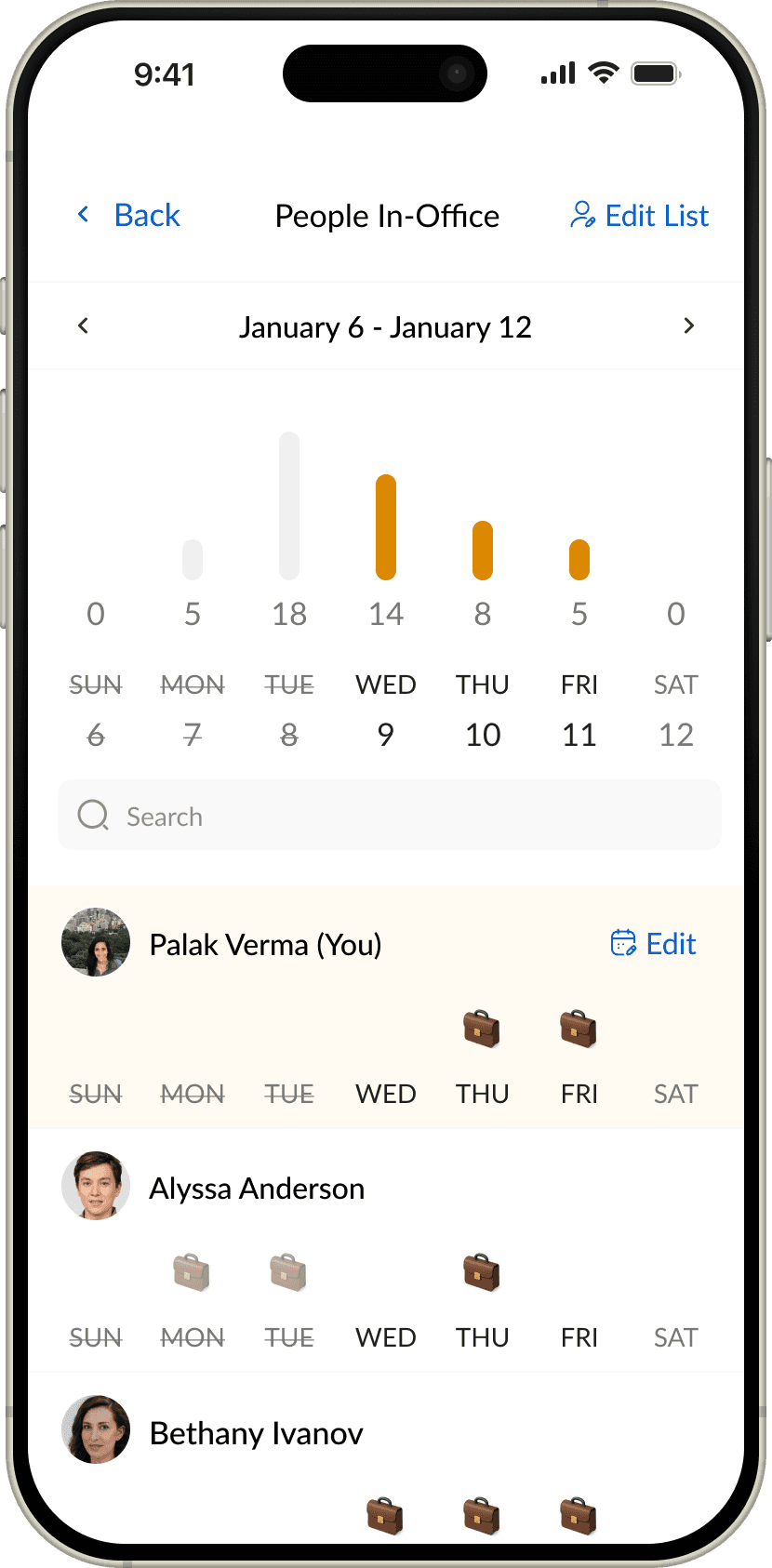
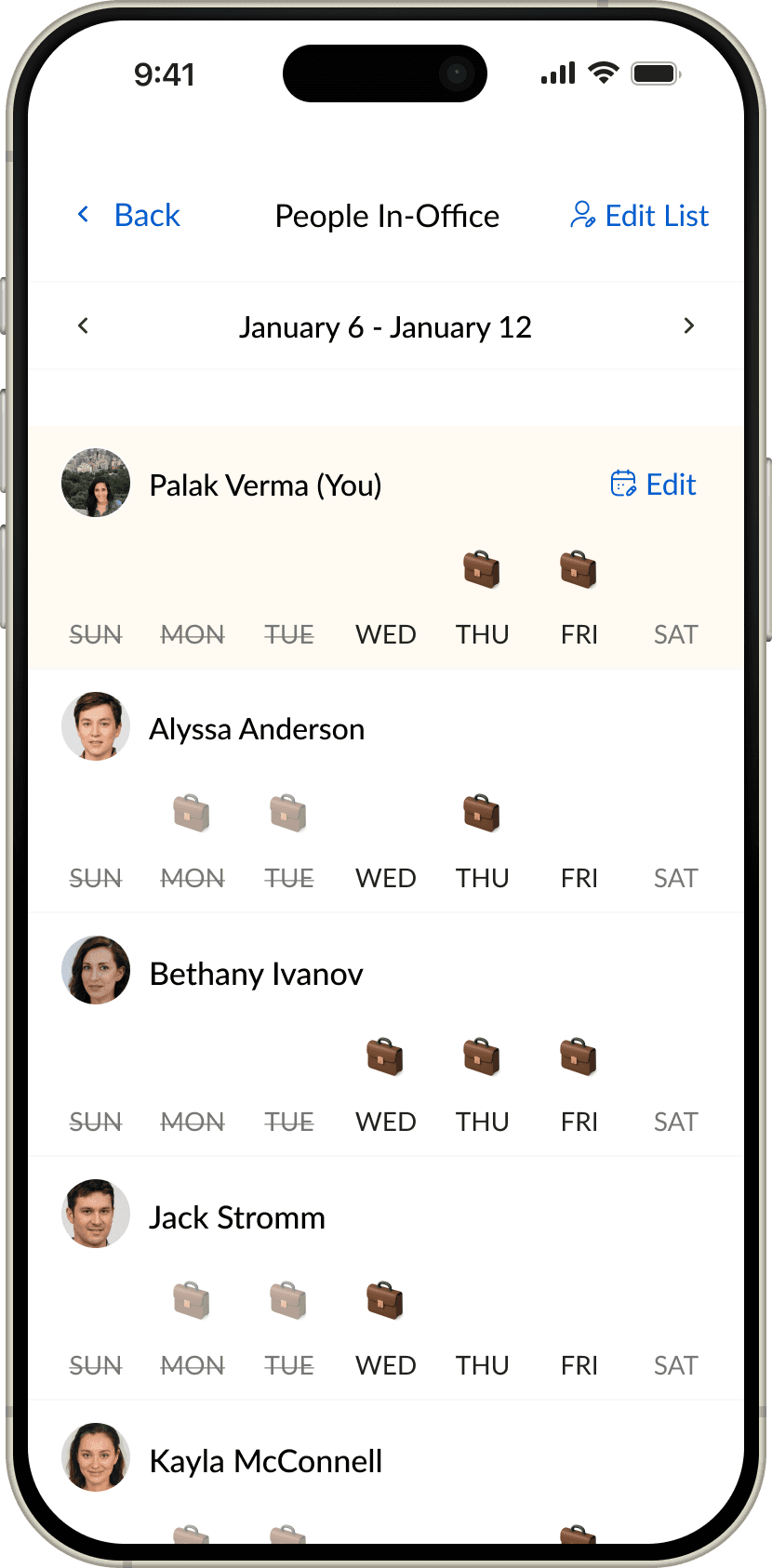
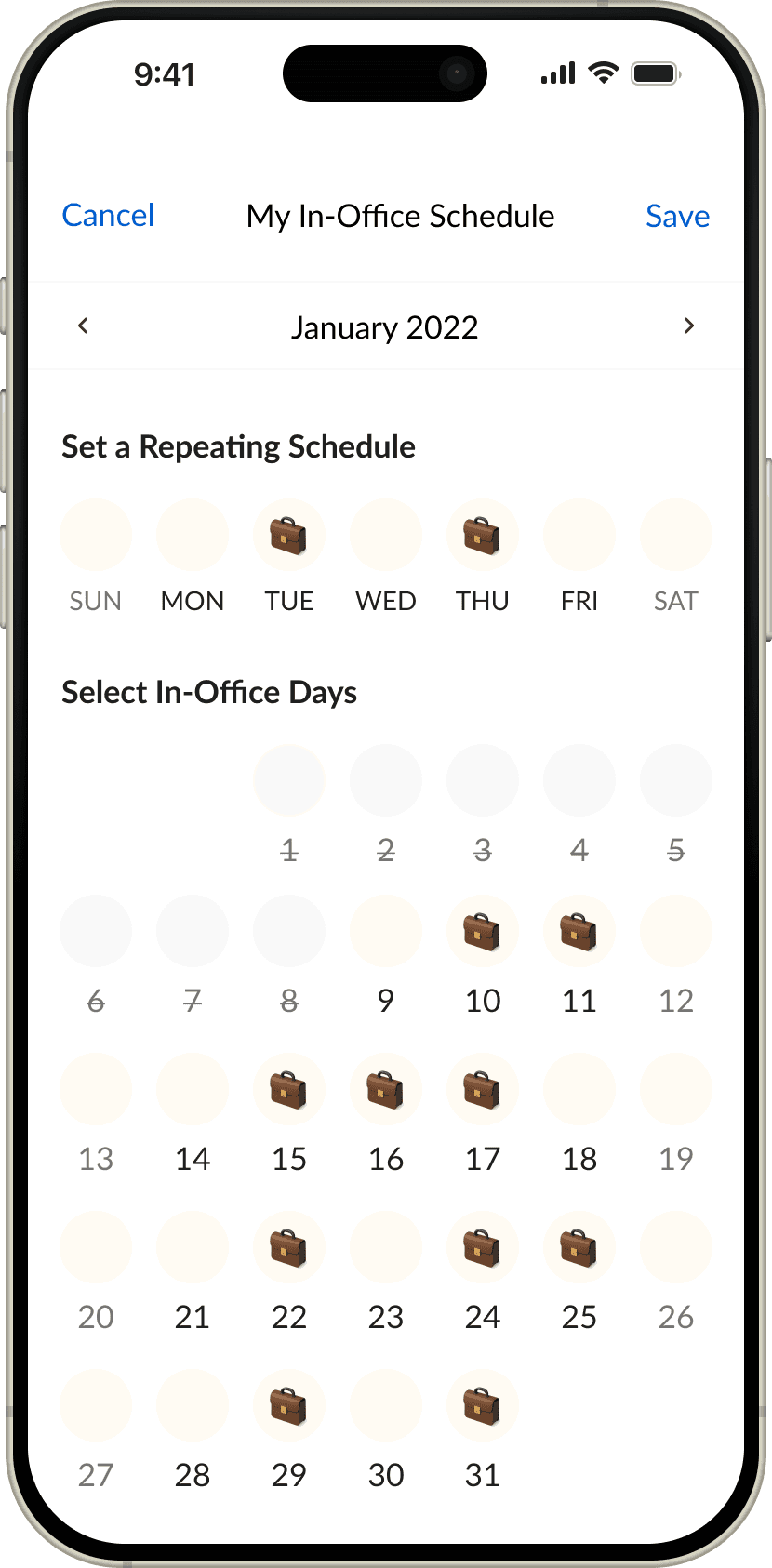
I designed an in-office scheduler that lets employees share their on-site days and see when teammates will be at work.
Prioritization
The success of this entire feature relied on how accurate in-office schedules were. If schedules weren’t reliable, employees would quickly lose trust between what someone indicated and their actual attendance.
To make changes easy, I prioritized the experience of modifying your own in-office schedule on homepage.
I designed the in-office schedule to automatically sync to any desk bookings, badge taps, and room reservations, updating a person’s in-office status accordingly. This makes it easy for the office schedule to be as accurate as possible with fewer modifications on the user's end.
I also designed the tool to feel supportive, not surveillant. Employees had full control over their data and could opt out of syncing badge taps and desk bookings at any time.
Motivating Attendance
The challenge wasn't just displaying who was in-office. It was designing visibility in a way that actually motivated attendance. Showing every single person in-office actually just created noise for the employee. At the same time, asking employees to manually add relevant people introduced too much friction.
To solve this, I designed the feature so a person's direct manager, teammates and up to 2 skip levels were added by default. Showing the total number of people in-office was important to demonstrate that many employees were coming in. However, highlighting relevant colleagues was important to show employees the value they'd get from being at the office.
I also made sure that the default colleagues list never dropped below 15. In testing, this threshold felt meaningfully active. If someone had a smaller team, I supplemented this list with adjacent collaborators in the same department. The users could always edit this list and add/remove people.
🏆 The Impact
Within 8 weeks, we saw a 20% increase in users going in at least 2 days a week.
Problem #2
There are fewer desks than employees at every office.
Company Perspective
The company hired a record number of employees in the last 2 years. This wasn’t an issue during remote work, but now there were fewer desks available than employees assigned to each office. RBC executives were working on gradually getting more office space to address long-term capacity needs.
Manager Perspective
Managers struggled to designate shared in-office days if they couldn’t guarantee desks for their team on a given day.
Teams needed to stagger their in-office days to ensure adequate seating capacity.
User Perspective
Employees faced the risk of commuting in only to find no available workspace.
Although a desk booking system existed, it was cumbersome and could take up to 10 minutes to complete a reservation. Because of this friction, many employees skipped booking altogether and relied on finding an open hot desk. That behaviour led to further breakdowns including situations where someone was occupying a desk that had technically been reserved by someone else. Then employees who had booked a desk had to awkwardly ask others to move or go home if nothing else was available.
How do we allocate office desks to employees most efficiently?
Solution #2
I designed a smarter desk booking system that made reservations more predictable.
Reducing Booking Friction
The core problem was that most employees weren't booking desks, Often, they ended up sitting on other people's reserved desks, making it frustrating for those who had booked a desk. This broke trust in the desk booking system and caused desk bookers to abandon it and become "hot deskers" themselves.
I needed to reduce the friction of employees being able to book a desk. I optimized the solution for telling the employee where their desk is going to be rather than asking them to book a desk. I tied desk booking to in-office days and badge taps so that if someone indicated they were coming in, a desk was automatically reserved on their floor. If they had previously booked a desk, our system would try to reassign the same desk or closest one to it.
But, this created another problem. Easier bookings lead to more desks being blocked even if someone didn't come in. Since we had fewer desks than people, the accuracy mattered.
I introduced a check-in feature. If employees hadn't tapped their office badge or clicked the “check-in” button by 10:30 AM, their desk is automatically released for others to book. The 10:30 AM cutoff was determined in collaboration with RBC's HR team.
🏆 The Impact
Employees now spent less than 30 seconds trying to book a desk everyday. The ability to reserve a recurring desk (same spot) also reduced stress for frequent in-office employees because they didn't have to search for their random "new" desk everyday.
The results
✅ Scaled from 3,000 MVP users to 20,000+ monthly active users across 5 RBC corporate offices within 6 months.
✅ Achieved 34% adoption across eligible employees within 8 weeks of launch, validating the need for experience.
✅ 70% of surveyed employees reported a significant improved in-person planning attributed to our product.